The best time to visit Los Cabos

Prices checked November 20, 2026Page updated November 20, 2026Edited by David Perez

Timing decides more in Los Cabos than in most beach destinations because three different problems rotate through the year. The sea is coldest in February and March, when the air feels perfect. The sea is warmest in September and October, when storm risk peaks. Rates are highest from December 20 to January 2, when the weather is good but not uniquely good. A reader who picks the month first and the hotel second will usually get a better trip for less money.

This page uses the destination rate bands checked November 20, 2026. Festive rates run $950 to $1,600 plus at the flagship set. Whale peak from January to March runs $780 to $1,316. Shoulder rates in April and May run $550 to $900. Summer value arrives in June and July with heat attached. August to October is the rate floor, for a reason this page names honestly. Cabo, Los Cabos, and Cabo San Lucas are used here as travelers search them: one destination, three areas, very different months.

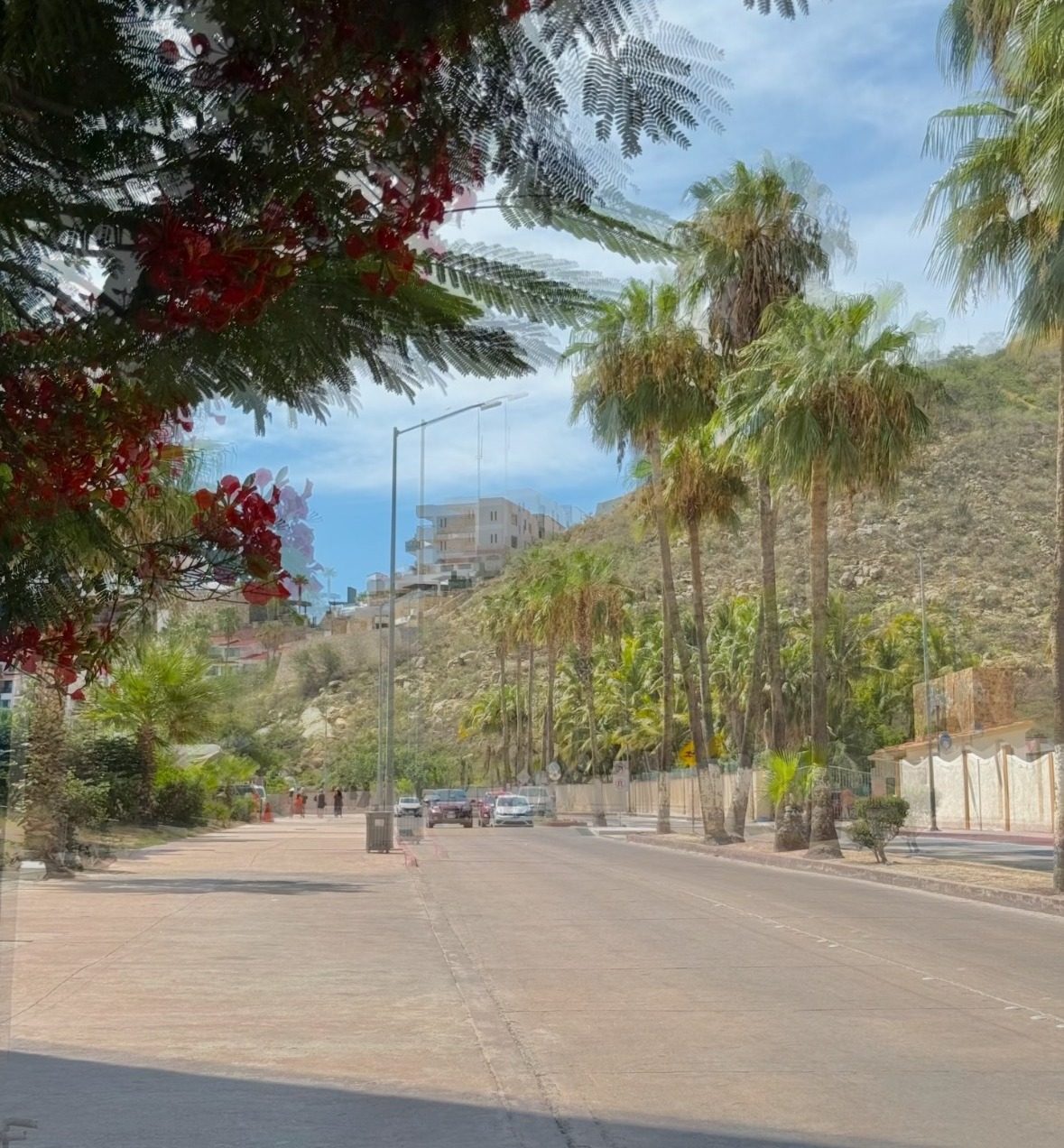
A palm-lined street under a flowering flamboyant tree, Los Cabos
A palm-lined street under a flowering flamboyant tree: the dry-season streetscape most visitors time their trip for. Photo: David Perez.

The single best month: November, argued honestly against January

November wins on the combination, not on any single factor. Average highs are near 87F, rain averages about 17mm for the month, and the sea holds at 80 to 82F, warm enough for long swims at Medano Beach, Palmilla Beach, Santa Maria Bay, and Chileno Bay without a wetsuit. Hurricane season runs to November 30 on paper, but risk falls fast after mid October, and November sits in the locals sweet spot named in the climate normals: warm water, cooling air, and resorts fully open after the quiet season.

January has two real advantages: humpback whales at peak, and the driest, most predictable weather of the year. It loses on price and water. January sits inside the $780 to $1,316 whale peak band, festive spillover keeps early January expensive, and the sea is 70 to 72F, chilly for casual swimmers. Winter nights also drop into the mid 50s F. If whales are the purpose of the trip, choose January and pay for it knowingly. If the trip is about swimming, value, and calm, November is the better month.

A pink sunset over resort buildings with palm trunks wrapped in string lights, Los Cabos
Sunset over the resort strip, palms wrapped in string lights. Every season on this page ends its days like this; they differ in price, crowds, and sea. Photo: David Perez.

The best value window: late April and May

Late April and May are the value answer for travelers who do not need whales. Shoulder rates of $550 to $900 at the flagship set replace the $780 to $1,316 peak, spring break crowds are gone, and rainfall is near zero. May has the driest feel of the year. Highs climb to about 86F in April and 90F in May, hot at midday but manageable with morning activities, a shaded pool in the afternoon, and dinner after sunset. Restaurants and boats are easier to book than in March.

The trade is clear and should be stated plainly. Humpback season ends in mid April, so late April sailings are a gamble and May has no whale case at all. The sea warms from 72 to 74F in April to 76 to 78F in May, which suits most swimmers by May. Golf greens fees also ease from winter peaks, and summer discounts have not yet arrived because the heat is still moderate. For couples and golfers without school calendar pressure, this is the smartest money window of the year.

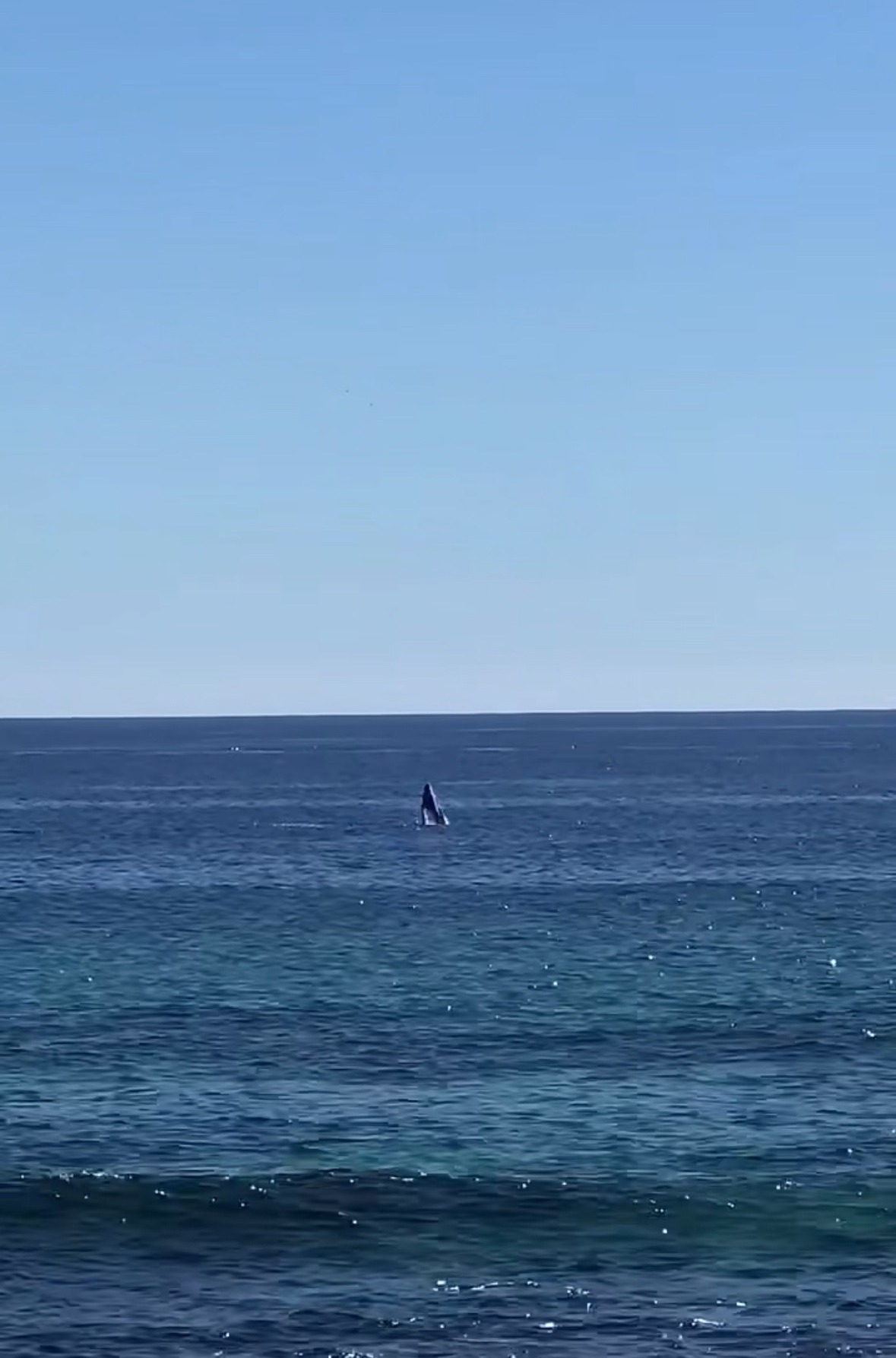
A whale surfacing in deep blue water offshore in Los Cabos
A whale surfaces in the deep blue offshore. January to March, this is a daily sight from the water and a regular one from shore. Photo: David Perez.
SeasonMonthsFlagship starting ratesWhat it is like
Festive peakDec 20 to Jan 2$950 to $1,600+The highest rates of the year, minimum stays, everything booked early.
Whale season peakJan to Mar$780 to $1,316Whales offshore, perfect dry weather, spring break noise in Cabo San Lucas in March.
ShoulderApr to May$550 to $900Warm, quieter after Easter; Holy Week spikes inside this window.
Summer valueJun to Aug$420 to $700Hot, humid spells, warm sea; the luxury set at its cheapest.
Hurricane windowAug to Oct$400 to $680Lowest rates and real storm risk; flexible cancellation matters more than price.
Riviera season opensNov to mid-Dec$600 to $950Art Walk season in San Jose, Bisbee's aftermath, rates climbing toward festive.

Rate bands are researched starting-rate ranges at the flagship luxury set across 2026 published rates; your dates and room category move the number. Sea and weather notes reflect the destination's normal seasonal pattern, including the Eastern Pacific hurricane season, May 15 to November 30, with peak risk August to October. Last verified November 20, 2026.

Month by month verdict, without the filler

December splits in two: December 10 to 19 is shoulder priced with decorations up, while December 20 to January 2 is the festive peak at $950 to $1,600 plus. January and February are peak season, dry and whale rich, with cool seas and cold nights. March adds spring break crowds on Medano Beach and downtown Cabo San Lucas, then Semana Santa can stack a second, family peak on top. April improves as the month goes on. May is value with heat rising. June and July are summer value, highs near 92 to 94F, humidity building, sea at 79 to 84F.

August turns the corner into real storm season. September is the worst month on this page by a clear margin: 80 to 115mm of rain on average, the warmest sea of the year at 84 to 86F, and the highest hurricane risk, with Hurricane Odile on September 14, 2014 as the modern benchmark for what a direct hit does. October is two months in one: risky and wet early, rapidly better after mid month, with fishing tournaments bringing crowds and energy. November, covered above, is where the curves cross in the travelers favor.

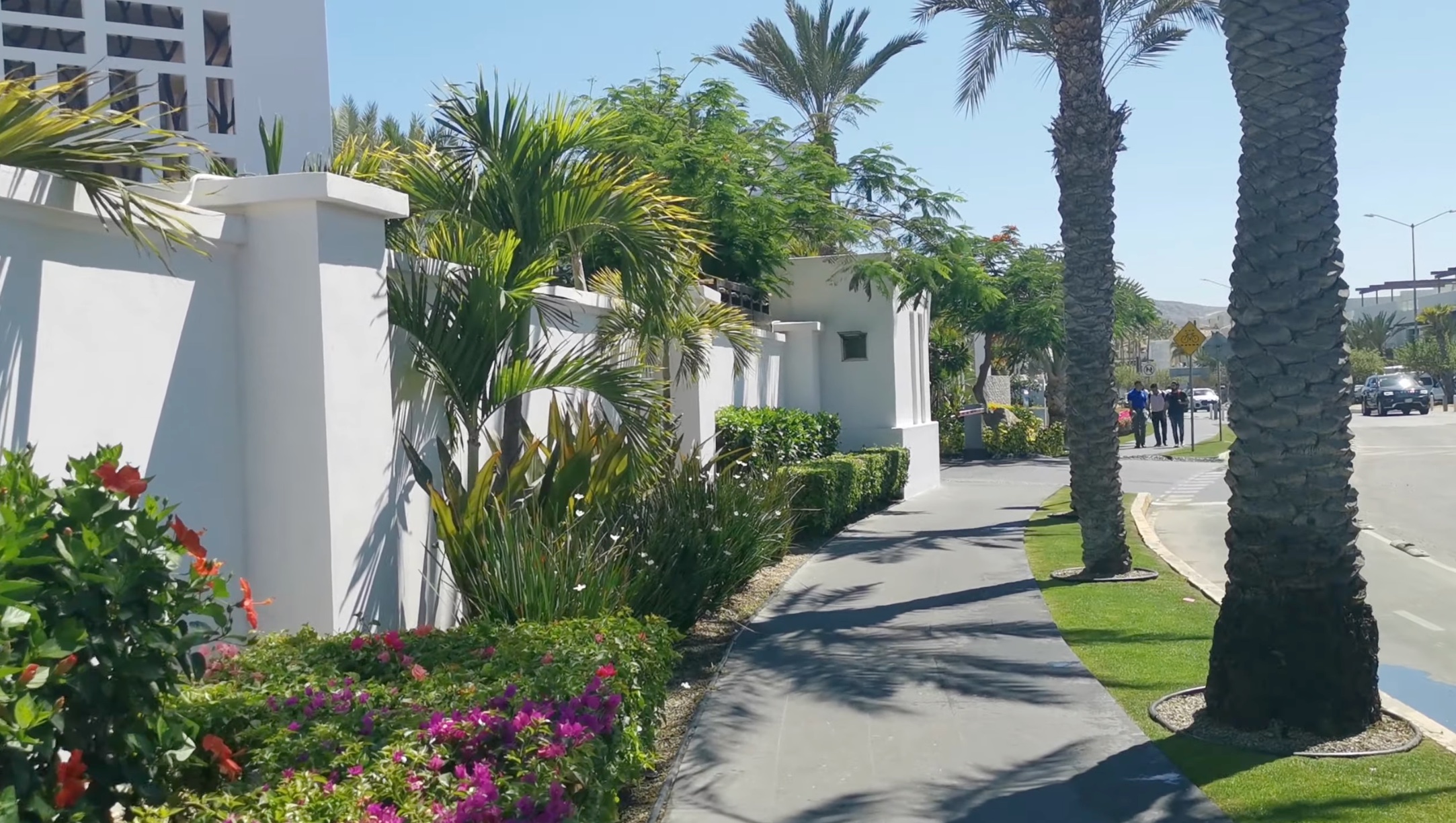
A resort-row sidewalk in Los Cabos lined with palms and flowering hedges in bloom
The resort row in bloom: the winter and spring months are when the landscaping earns its keep. Photo: David Perez.

Whales, spring break, storms, and festive pricing: the four forces

Whale season runs mid December to mid April, peak January to March, and it is a genuine reason to pay peak rates if the animals are the point. Spring break runs late February through March, peak mid March, concentrated on Medano Beach and downtown bars, while San Jose del Cabo and the Corridor stay comparatively calm. Storm season is not a vague warning: the Eastern Pacific season runs May 15 to November 30, but the real risk concentrates August to October, September highest, and most years bring rain days and closed ports rather than a direct hit.

Festive pricing is the fourth force and the easiest to dodge. From December 20 to January 2, minimum stays, sellouts, and rates of $950 to $1,600 plus buy weather that early December and mid January also offer. The traveler paying festive rates is paying for the calendar, for school holidays and office closures at home, not for better Cabo weather. Naming that honestly is the point of a timing page: the destination does not get better on December 20, it gets fuller and more expensive on a date driven by other countries holidays.

Where to stay, briefly, because this is a timing page

Three picks cover the main timing strategies. Montage Los Cabos on Santa Maria Bay suits November and May swimmers because the bay is swimmable and protected, with researched starting rates from $895. Hilton Los Cabos is the value anchor of the Corridor from $375, with a rare swimmable protected cove, and it makes shoulder season savings real without leaving the Corridor. Viceroy Los Cabos in San Jose from $415 suits travelers dodging spring break crowds, with walkable dining nearby, though its beach is look only.

That is the full hotel section on purpose. A best time page that turns into a roundup serves nobody. Pick the month using the verdicts above, then use the area and hotel guides for the shortlist. One timing specific note: in December to February, ask any hotel whether its main pool is heated before booking. Unheated pools feel cold in those months across Los Cabos, and the answer changes which property is right for a winter trip more than most amenity lists do.

Montage Los Cabos

Santa Maria Bay, Corridor

Montage holds the strongest beach argument in luxury Los Cabos. It sits on Santa Maria Bay, a protected marine sanctuary with calm, swimmable water and the best resort snorkeling in the destination, straight off the sand. The spa is enormous, service is polished, and select residences add private pools for longer stays. Researched starting rates run from $895. The honest limits: standard hotel rooms share the resort pools, so private-pool seekers must price the residences, and the quiet, refined pace will bore travelers chasing a scene. If swimmable water is non-negotiable at this level, our call is Montage or Palmilla.

Swimmable beach
Yes, Santa Maria Bay
Private pool
Select residences
Plan
European plan
Best for
Luxury travelers who insist on swimmable, snorkelable resort water
Watch out
Private pools only in residences, hotel rooms share resort pools
Rates
From $895 per night, researched starting rate. Checked November 20, 2026.
Check live prices

Hilton Los Cabos Beach & Golf Resort

Tourist Corridor

Hilton is the Corridor value anchor and the exception that proves the swimmable rule. A rock breakwater protects its cove, creating genuinely swimmable water that most pricier neighbors lack, at researched rates from $375, hundreds below the luxury strip around it. The plan is flexible, European plan with an all-inclusive option, and families get a full resort without flagship pricing. The honest trade-offs: no private pools anywhere, and service and dining polish sit a level below Montage or Grand Velas. Our call for families is simple. If swimmable water matters and budget matters too, start here before paying luxury rates for look-only sand.

Swimmable beach
Yes, protected cove
Private pool
No
Plan
European plan, all-inclusive optional
Best for
Families wanting a swimmable Corridor cove without luxury pricing
Watch out
No private pools and fewer frills than neighboring luxury resorts
Rates
From $375 per night, researched starting rate. Checked November 20, 2026.
Check live prices

Viceroy Los Cabos

Hotel Zone, San Jose del Cabo

Viceroy is the architecture pick, full stop. The white lattice cubes and mirror pools, first opened as Mar Adentro, photograph like nowhere else in Mexico, and the design holds up in person. It also sits in the San Jose Hotel Zone, which makes it more walkable to town dining than most resorts, at researched rates from $415 that undercut the Corridor luxury set. The catch is the beach: Hotel Zone frontage is look-only, and only select rooms carry private pools, so read the room category carefully. Choose it for design and value, not for ocean swimming.

Swimmable beach
No
Private pool
Select rooms
Plan
European plan
Best for
Design lovers wanting San Jose access at mid-luxury rates
Watch out
Hotel Zone beach is not swimmable, pools carry the trip
Rates
From $415 per night, researched starting rate. Checked November 20, 2026.
Check live prices

The skip call, who this timing advice is not for, and how we judge

Skip the September bargain. The years lowest rates exist because September combines the wettest weather, the highest storm risk, and closures as some businesses use the quiet month for maintenance. A flexible traveler with refundable bookings and no fixed celebration can accept that gamble knowingly. Most travelers cannot, and for them September is not a secret deal, it is a discounted risk. Do November instead if dates can move, or late October after mid month if they can only move a little.

This timing advice is not for travelers locked to school holidays, tournament fishing dates in October, or a wedding date chosen by someone else. For them the month is fixed and the useful work is area and hotel choice inside that month, which the other guides handle. How we judge timing: climate normals from Mexicos National Weather Service, the rate bands in the matrix on this page checked November 20, 2026, and published season dates for whales and storms. No property pays for placement. Full method on our how we research page.

Season and timing

Year to year, the pattern holds but the edges move. A strong El Nino pattern tends to warm the sea and can raise late season storm risk, while cooler years make February and March water feel colder than the normals suggest. Whale arrival can shift by a week or two either side of mid December. Rain is the least reliable number on this page: Los Cabos averages only about 250mm a year, so one tropical storm can double a months total in two days, and a dry September, while uncommon, does happen. Book the probabilities, insure the exceptions.

Questions, answered straight

What is the best month to visit Cabo?

November, on our call. Highs near 87F, the sea still warm at 80 to 82F, rain low at about 17mm, and rates below the January to March whale peak of $780 to $1,316 at flagship hotels. January wins only if whales are the main purpose. Late April and May win on value at $550 to $900 shoulder rates. September is the month to avoid: wettest, stormiest, and the reason its rates are the years lowest.

What is the cheapest month to visit Los Cabos?

September is usually the cheapest month, with August and early October close behind in the storm season rate floor. The discount is real and so is the reason: September averages 80 to 115mm of rain and carries the highest hurricane risk of the year. Travelers who want cheap without that risk should look at June and July summer value, or late April and May shoulder rates of $550 to $900, which pair lower prices with near zero rain.

When is hurricane season in Cabo?

The Eastern Pacific hurricane season runs May 15 to November 30, set by the US National Hurricane Center. Risk in Los Cabos concentrates from August to October and peaks in September. Hurricane Odile, a Category 3 direct hit on September 14, 2014, closed the airport for about a month and remains the modern benchmark. Most years bring no direct hit; tropical storms more often mean one to three days of rain, heavy surf, and closed ports.

Is Cabo warm in January?

Yes in the daytime, with average highs near 80F and rain around 6mm for the month. Two honest caveats matter. Nights drop into the mid 50s F, so dinner outdoors needs a jacket, and unheated pools feel cold. The sea is 70 to 72F, the coolest stretch of the year alongside February and March, which surprises swimmers expecting bath water. January is peak whale season and peak pricing, $780 to $1,316 at flagship hotels, checked November 20, 2026.

When is whale season in Los Cabos?

Humpback whales are present from mid December to mid April, with the peak from January to March, when boats from the Cabo San Lucas marina and San Jose run daily and sightings are most reliable. December and April are shoulder edges where trips still run but numbers thin. Gray whales are a separate trip: they calve in Pacific lagoons such as Magdalena Bay, three plus hours each way, so that is a long day trip, not a marina add on.

When is spring break in Cabo San Lucas?

Spring break runs from late February through March, peaking in mid March. The party concentrates on Medano Beach and the downtown Cabo San Lucas bars; San Jose del Cabo, the Corridor, and the East Cape stay comparatively calm. In 2027, Semana Santa, Mexicos Holy Week holiday, runs March 21 to 27 and stacks a large family peak on top of late spring break. Travelers who dislike crowds should pick San Jose or shift to April.

Is May a good time to visit Cabo?

Yes, and it is the value pick on this page. May averages near zero rain, highs around 90F, and a sea warming to 76 to 78F, with shoulder rates of $550 to $900 replacing winter peaks. The costs are honest ones: whale season has ended, midday heat is real, and humidity has not yet arrived, which most visitors count as a plus. Golf, boats, and restaurants are all easier to book than in March.

What months should I avoid in Los Cabos?

September first, by a wide margin: the wettest month at 80 to 115mm of rain, the warmest sea, and the peak of hurricane risk. August shares much of that risk with slightly less rain. Travelers fixed on celebrations should also treat December 20 to January 2 carefully, not for weather, which is pleasant, but for price: $950 to $1,600 plus at flagship hotels with minimum stays. Every other month has a clear case for the right traveler.

Is October a good time to visit Cabo?

After mid October, yes. Early October still carries storm season risk and averages about 25mm of rain for the month, but risk falls fast after mid month, the sea stays warm at 84 to 85F, and rates sit below winter peaks. October is also peak fishing tournament season, including Bisbees Black and Blue, so the marina feels busy and festive. Book refundable rates for early October and check forecasts in the final week before travel.

How far ahead should I book for peak season?

For late December and for January to March whale peak, book three to six months ahead for the best rooms at researched rates; the flagship set sells its best categories first. Shoulder months, April, May, and November, usually hold good availability six to ten weeks out. Storm season books late by nature. Whatever the month, confirm pool heating for December to February stays and read cancellation terms carefully for August to October travel, when flexibility is worth more than a small rate saving.